
Mindful Drawing
Explore mindful drawing techniques that help you slow down, reduce stress, improve focus, and express yourself creatively through relaxing art practices.
Primary: mindful drawing
Secondary: mindfulness drawing, mindful art, drawing meditation
When was the last time you drew something without worrying whether it looked good? For many people, drawing becomes associated with skill. We compare our drawings to other people’s artwork and decide whether something is “good” or “bad.”
Mindful drawing approaches creativity differently
Instead of focusing entirely on the final result, mindful drawing encourages you to pay attention to the experiences of creating. Your pencil, the paper, your breathing, and the movement of your hand become part of the exercise. You do not have to be an artist.
You simply have to draw

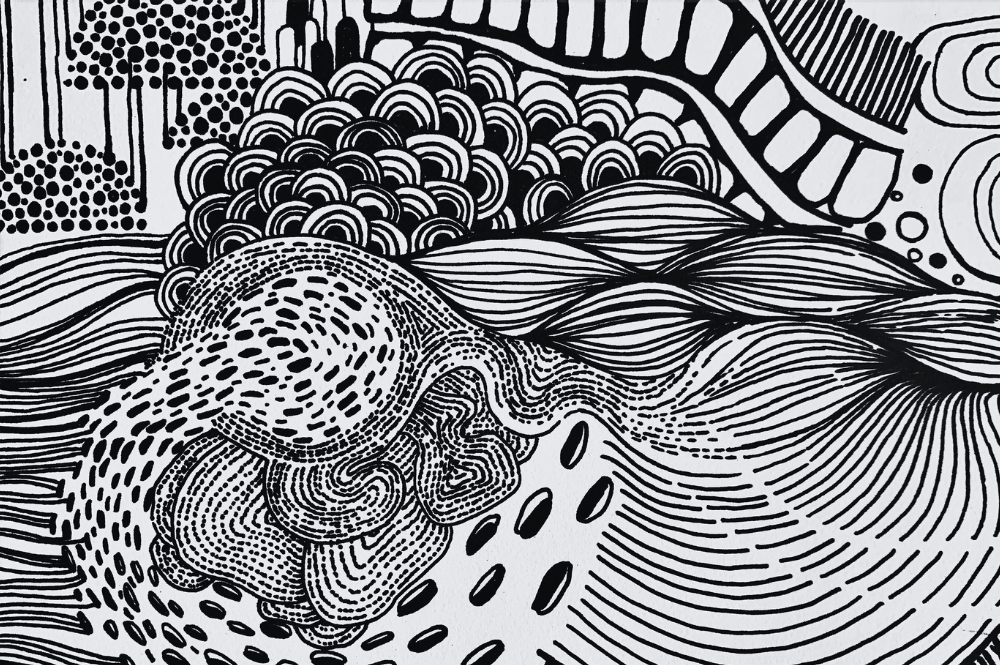
What Is Mindful Drawing?
Mindful drawing is a creative practice that combines drawing with mindfulness.
Mindfulness involves intentionally paying attention to the present moment. During mindful drawing, the drawing itself becomes something you can focus your attention on.
You might notice the paper's texture.
You might watch a line slowly appear underneath your pencil.
You might notice that you are pressing harder when you become frustrated.
These small observations bring your attention back to what you're doing.
The Process Matters More Than The Picture
Traditional drawing exercises often have a specific objective.
Draw a realistic face
Practice perspective
Learn anatomy
Mindful drawing exercises can be much more open. The purpose is not necessarily to improve your technical drawing abilities. Instead, the activity encourages you to experience creativity without constantly evaluating your performance.
Why Try Mindful Drawing?
Drawing is extremely accessible. You can practice with nothing more than a pencil and a piece of paper. That simplicity makes drawing meditation easy to incorporate into everyday life.
Slow down
A mindful drawing session creates an intentional pause in your day.
Rather than scrolling through another video or checking another notification, you spend a few minutes focusing on one activity.
Improve Your Attention
Try drawing one object for ten minutes
You might quickly notice how often your mind wants to move towards something else
Instead of becoming frustrated, return your attention to the object. That process- getting distracted and returning your attention is an important part of mindfulness practice
Explore Creativity Without Pressure
You do not need to show your mindful drawings to anyone.
They can remain completely private.
Knowing that nobody needs to evaluate your artwork can make experimentation easier: draw something strange, use unexpected colors, fill an entire page with circles; there is no wrong answer.e
Mindful Drawing Techniques for Beginners
There are many ways to practice relaxing drawing, but beginners can start with a few simple exercises.
1. Draw Repeating PatternsChoose one simple shape. It could be a circle, triangle, wave, leaf, or spiral. Slowly repeat the shape across the page. Pay attention to the differences between each one. Avoid trying to make them identical
.2. Blind Contour DrawingChoose an object in front of you. Place your pencil on the paper and look at the object instead of your drawing. Slowly move your pencil while following the edges of the object with your eyes. The finished drawing may look unusual—and that's part of the fun.This exercise encourages observation instead of perfection.
3. Draw With Your BreathingPlace your pencil near the left side of the page. As you breathe in, slowly move your pencil upward. As you breathe out, move downward. Continue until you reach the opposite side.The resulting pattern represents the rhythm of your breathing
.4. Five-Minute DoodleSet a timer for five minutes. Start drawing whatever comes to mind. Do not erase anything.If you do not know what to draw, simply make lines until something inspires you.
What Do You Need to Get Started?
One advantage of mindful art is that you do not need complicated supplies.A beginner setup could include:Paper or a sketchbookPencilPenColored pencilsMarkersYou can always experiment with paints, charcoal, pastels, or other materials later.However, buying expensive supplies is not necessary.The most important thing is having materials that allow you to create comfortably.
Creating a Relaxing Drawing Environment
Your surroundings can influence the experience. Find somewhere you can sit comfortably for a few minutes. Consider putting your phone on silent or leaving it somewhere else. You could also play quiet instrumental music or nature sounds.Before beginning, take several slow breaths. Notice where you are.Then start drawing.
How to Make Mindful Drawing Part of Your Routine
You do not need to practice for an hour every day. Consistency can begin with very small sessions. Try mindful drawing for five minutes before bed, during a study break, after work, or whenever you want some quiet creative time. You could also create a weekly drawing prompt.
For example:Monday: Draw your breathing.Wednesday: Draw something from nature.Friday: Fill a page with patterns.Sunday: Draw something representing your week.
Over time, your sketchbook can become a visual record of your mindfulness practice.
You Don't Need to Be an Artist
Mindful drawing is not about becoming the best artist in the room. It is about giving yourself permission to slow down and experience creativity without constantly judging the result. A pencil and paper are enough to begin. Take five minutes today, put your phone away, and draw something without worrying about what it becomes.
Want some guidance? Explore our mindful drawing sessions and discover simple exercises designed to bring creativity and mindfulness into your routine.
Hi, this is a comment.
To get started with moderating, editing, and deleting comments, please visit the Comments screen in the dashboard.
Commenter avatars come from Gravatar.